
You Don’t Need A
Degree To Defend
Your Right
This Is Not A Law Firm,
It Is A Laylitigant Legal Compass
“Lay Litigant provides educational material only. — not to offer legal representation or advice.”
JUSTICE FOR ALL
WHO WE ARE
We are not a law firm — we are The Justice Empowerment.
Our platform is a compass, a toolkit, and a voice for anyone who’s been left behind by the justice system.
We believe knowledge is Power, and that power belongs to the people — not behind closed courtroom doors.
We represent the community, armed with legal tools, resources, and a fierce commitment to empowering everyday citizens.
We are here:
- For those failed by the system.
- For those ready to fight back — legally
- For first-time litigants stepping into court for the first time
- For the next generation of law students, armed with truth and courage
Lay Litigan is your legal toolkit — built by citizens, for citizens.
We don’t take NO as an answer — and neither should you.

Legal Tools
The Operation
OUR MISSION
Our mission is to arm everyday people with knowledge. We dismantle barriers by exposing cover-ups, publishing silence, and demanding Transparency and Accountability from every public office — because justice should never depend on your income
OUR VISION
A world where every citizen can challenge unfairness, defend their family, and understand their rights — without needing a degree or a lawyer. Where Transparency and Accountability are not optional
OUR VALUE
We stand with the failed, the fearless, and the future — because justice belongs to all, not just those who can afford it. Transparency, Accountability, and Acting in Good Faith are the new standard
Code Of Conduct
Question & Answer
1. Can I represent myself in Court
Yes, you can represent yourself in court. This is known as being a “Lay Litigant.” While you have this right, it is crucial to understand that you will be responsible for knowing and following all court procedures and rules, just like a qualified lawyer. We recommend reading more in our Justice Uprising Manual.
2. Which can I bring my case to?
The correct court for your case depends on the type and value of the “Relief” (what you are asking the court to do or order). Ireland has a layered court system:
- Small Claims Court: For minor disputes .
- District Court: For smaller civil claims
- Circuit Court: For larger civil claims or criminal matters.
- High Court: For the most serious civil cases (unlimited value)
To determine where your case fits, please read more about Court Relief in our Justice Uprising Manual.
3. What is the fee and charges of filing the court Case
The main fee for starting a case is a Stamp Duty that must be paid on your initial court document. You cannot officially file your claim without paying this duty. The specific document you need—such as a Plenary Summons, Civil Bill, Motion, or Affidavit—will determine the exact cost. Each of these documents requires its own stamp duty to be valid.
4. What is the first step to representing myself?
The first step is to clearly identify your legal issue and the “cause of action” (the legal reason you are suing). Once you understand this, you can determine the correct court and the specific document needed to start your case (e.g., a Civil Bill for the Circuit Court). Your next step is to draft that document, pay the required stamp duty, and file it with the appropriate court office.
LAYLITIGANT

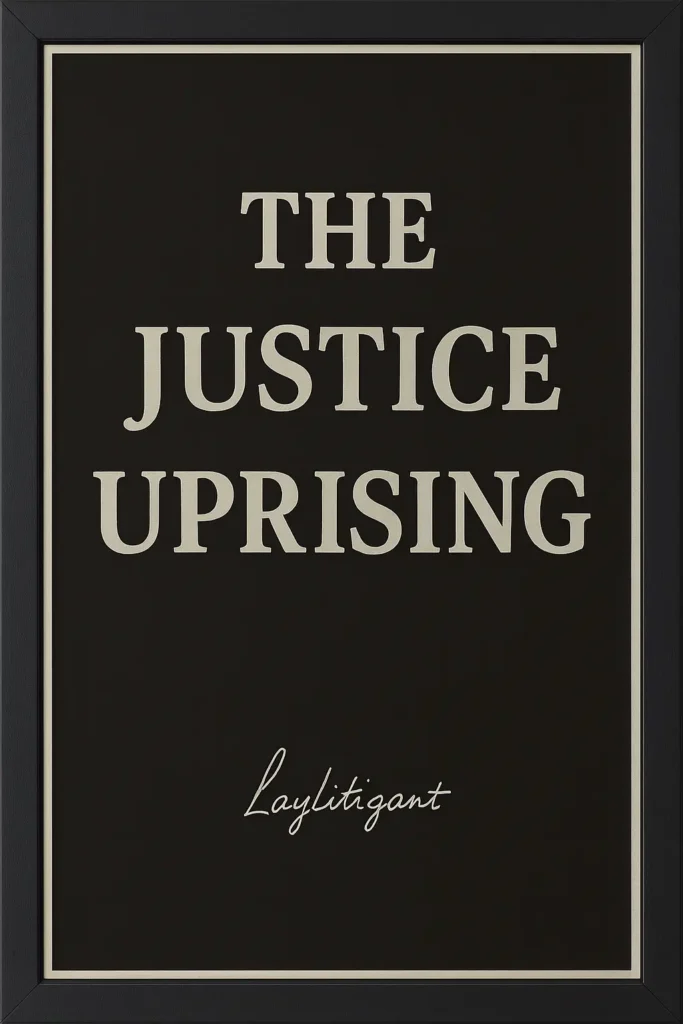


The Legal World Was Not Meant For Us, So We Create Our Own
“We do not take NO for an answer. We do not back down.”
© Copyright 2025 laylitigants – All Rights Reserved